
The aim of this language exchange event is to provide our students with a platform to improve their Mandarin in a fun and efficient way! Our teachers are professional, passionate, and patient. There are around 5 professional teachers at the event to …
岂(qǐ)有(yǒu)此(cǐ)理(lǐ) “岂有此理”指哪有这样的道理,表示对不合理的事极为气愤。 ‘Qǐyǒu-cǐlǐ’indicates ‘anger at something unreasonable’. It means ‘whoever heard of such absurdity’ or ‘outrageous’. 岂(qǐ): used to introduce a rhetorical question 有(yǒu): have 此(cǐ): this 理(lǐ): reason Examples例句: A: 今天早上遇到一个出租车司机,一边开车一边打电话,下车的时候还不给我发票。 B: 真是岂有此理!你应该去投诉他。 2. 自己做错了事,还要怪别人,真是岂有此理!
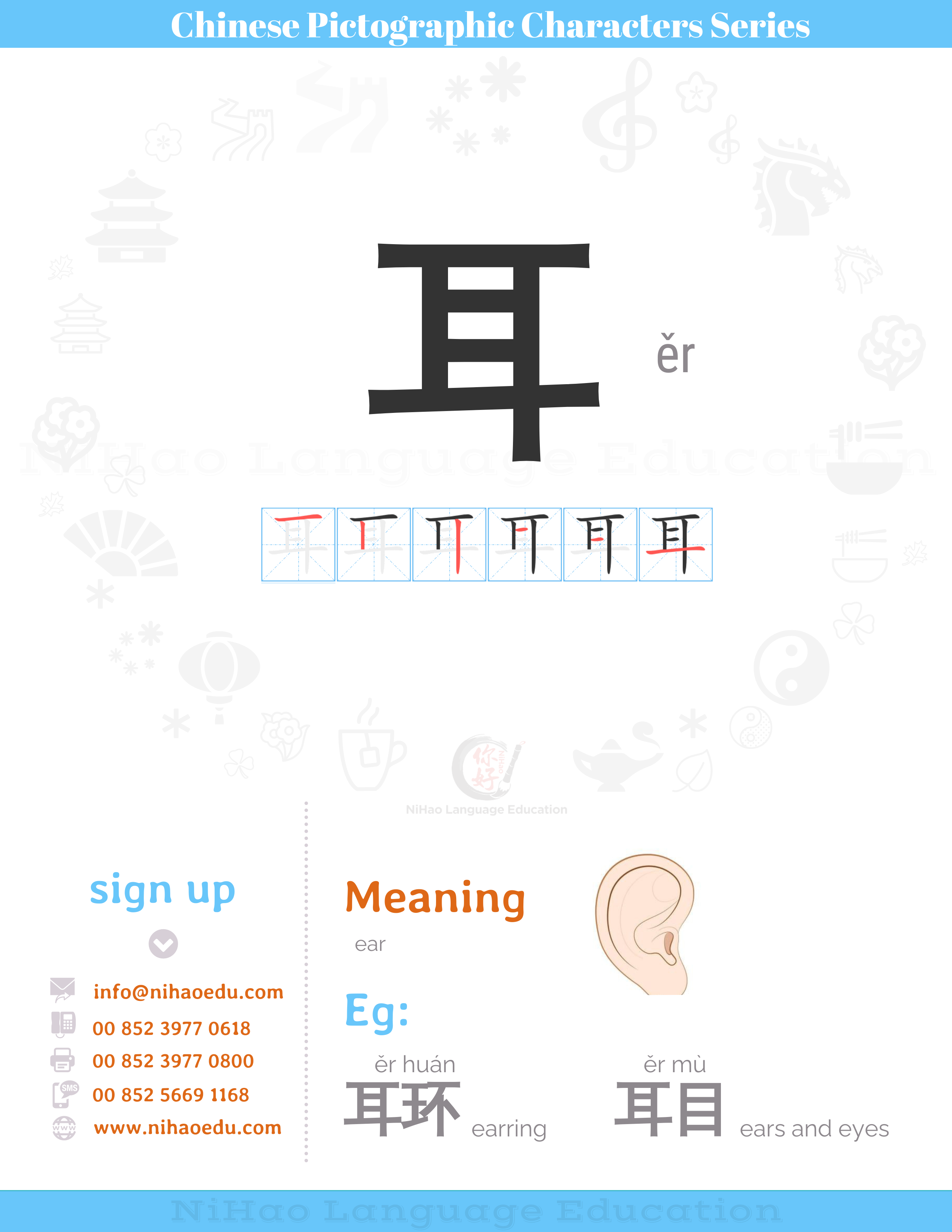
The word 耳 means ‘ear’ and the pictogram looks like the shape of an ear. The word 耳 is often used in phrases relating to the ear, for example, 耳朵 (ěr duo, ’ear’), 耳光 (ěr guāng, ‘slap in the face’), …
双(shuāng)喜(xǐ)临(lín)门(mén) “双喜临门”指两件喜事同时到来。 ‘Shuāngxǐ-línmén’ means ‘two happy events occur at the same time’. 双(shuāng): double 喜(xǐ): happiness; happy event 临(lín): to arrive 门(mén): door Examples例句: A: 听说她马上要结婚了,她姐姐的孩子也要出生了。 B: 那他们家真是双喜临门了! 2. 老张最近双喜临门,他儿子考上了名牌大学,他自己也做了经理。
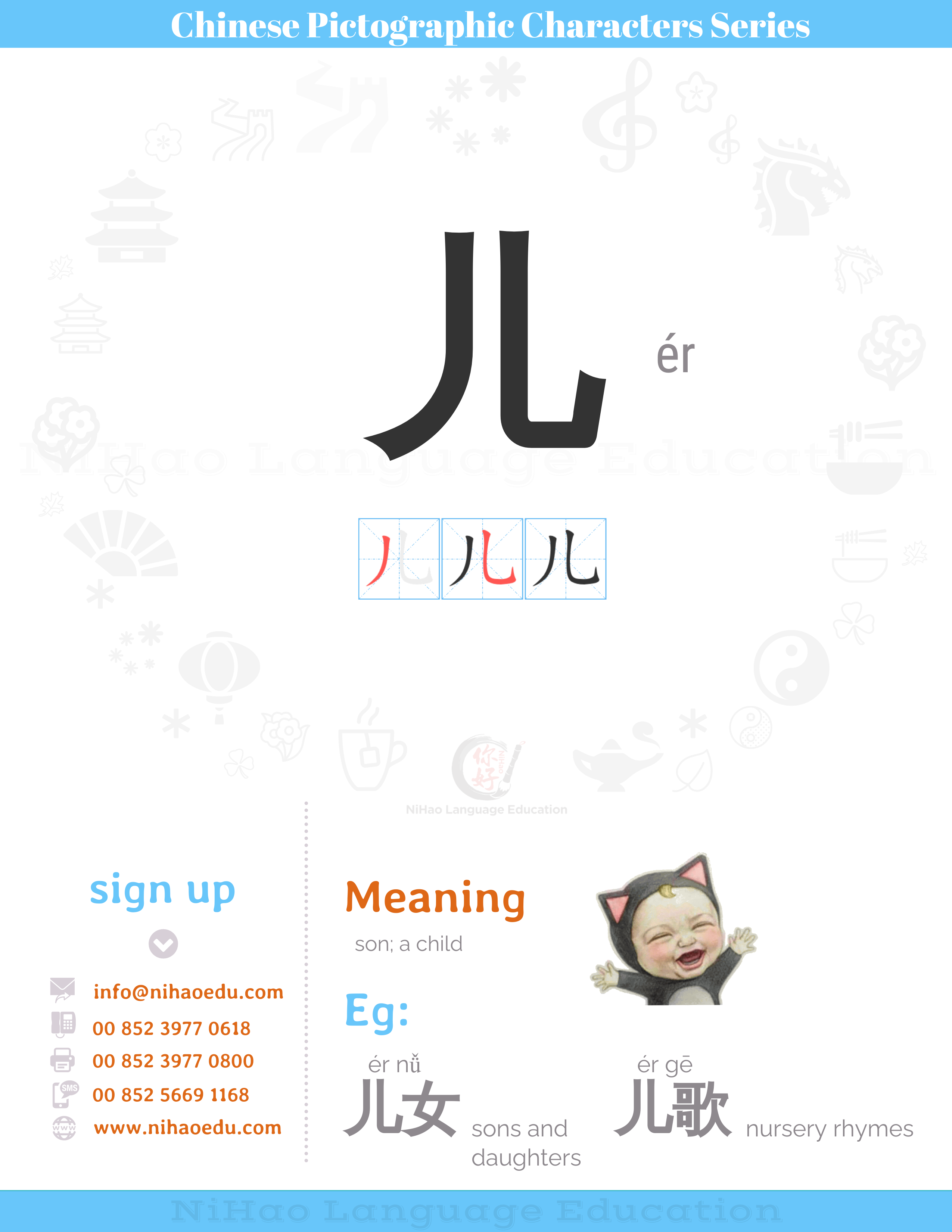
The word 儿 is the simplified form of the conventional character 兒. The pictogram of the conventional character shows an infant with a big head and a small body. The opening at the top of the pictogram represents the soft …
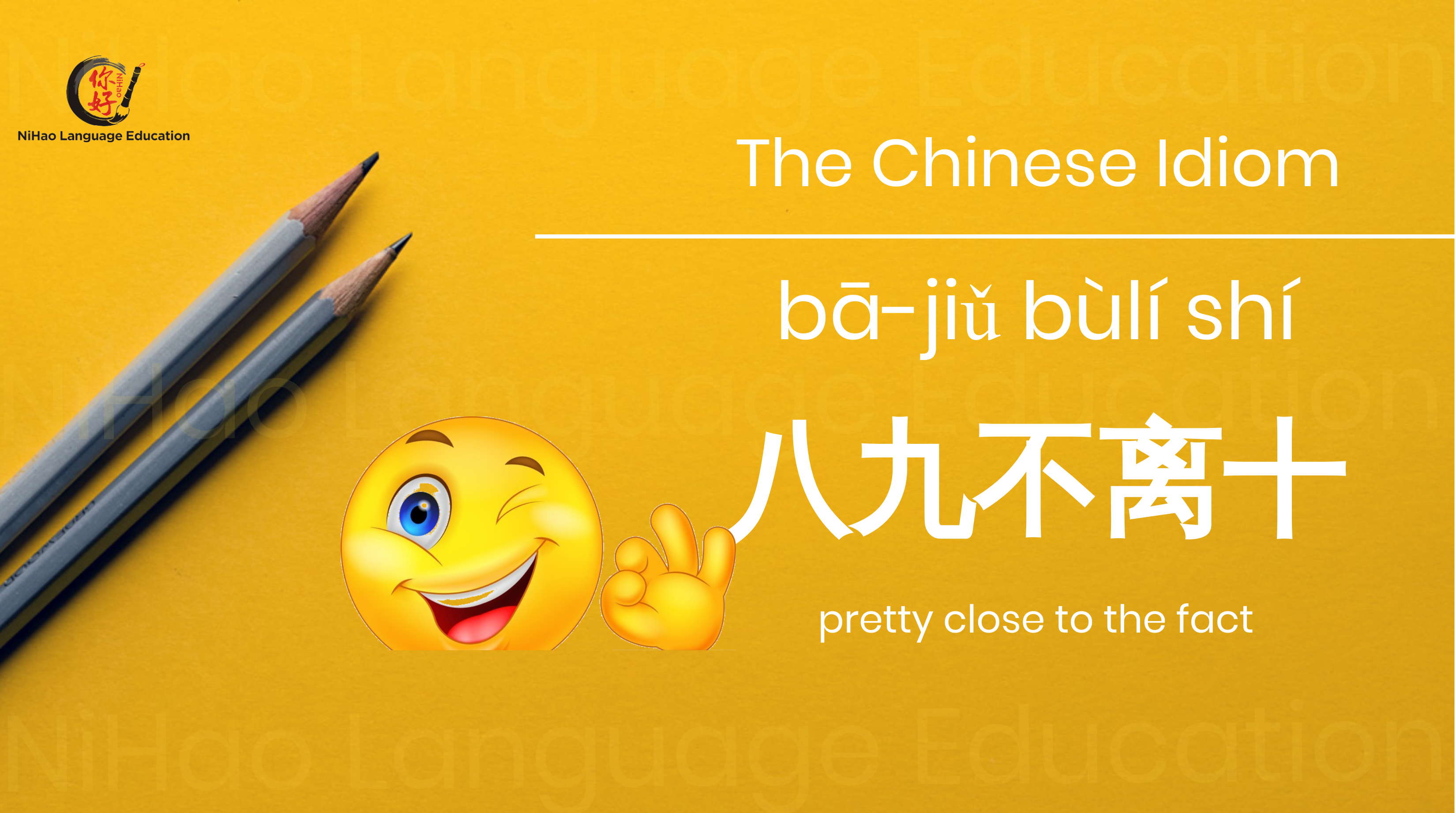
八(Bā)九(jiǔ)不(bù)离(lí)十(shí) “八九不离十”表示非常接近或几乎达到实际情况。 ‘Bājiǔ bù líshí’ means pretty close to the fact. 八(bā): eight 九(jiǔ): nine 不(bù): no; not 离(lí): to be away from 十(shí): ten Examples例句: 我虽然没有亲眼看见,但是猜也能猜个八九不离十。 2. A: 这么晚了,谁会打电话给你啊? B: 我想八九不离十应该是她的男朋友。
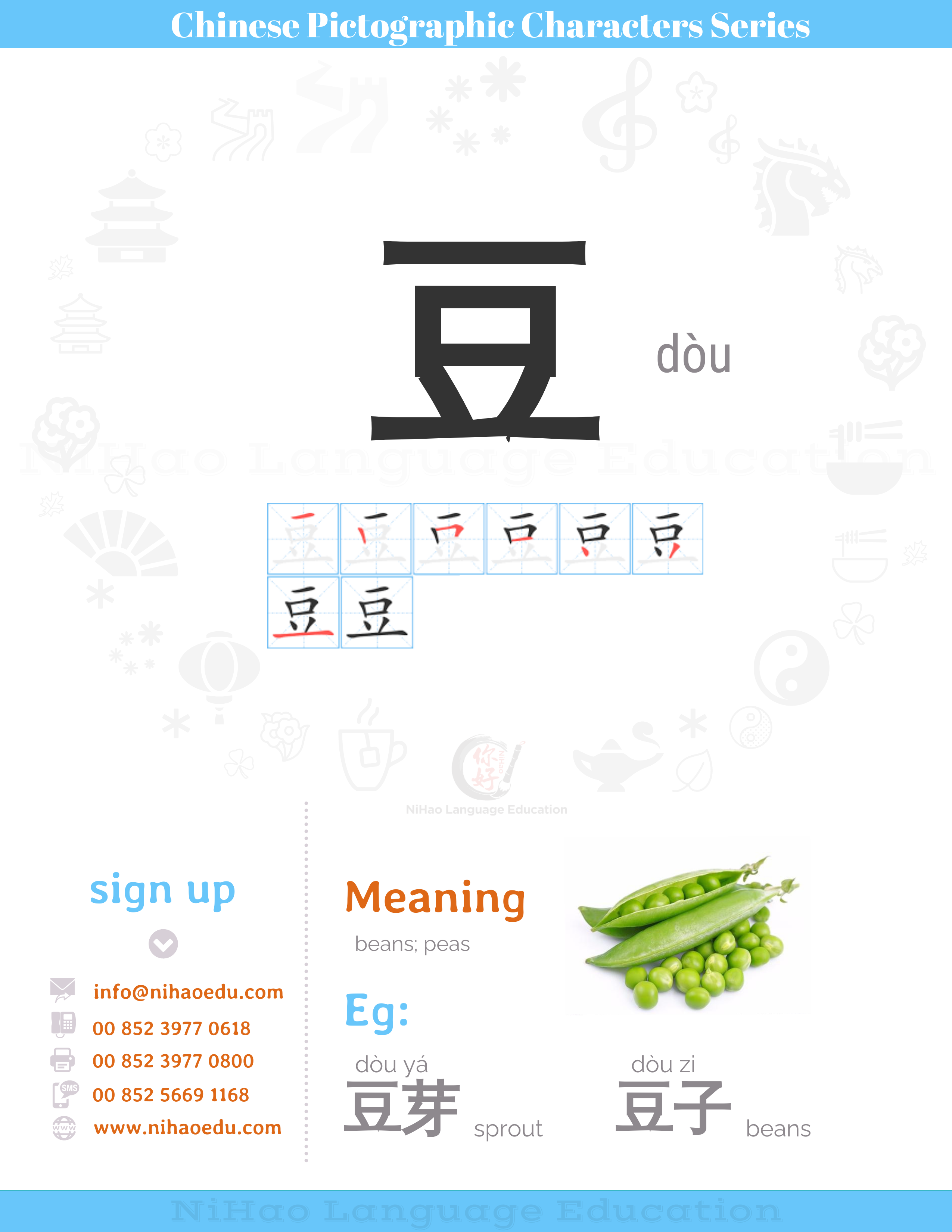
The pictogram of the word 豆 depicts a vessel with legs for keeping food in. the short line in the vessel represents the food inside it. The word now refers to most types of beans or peas. The word 豆 …
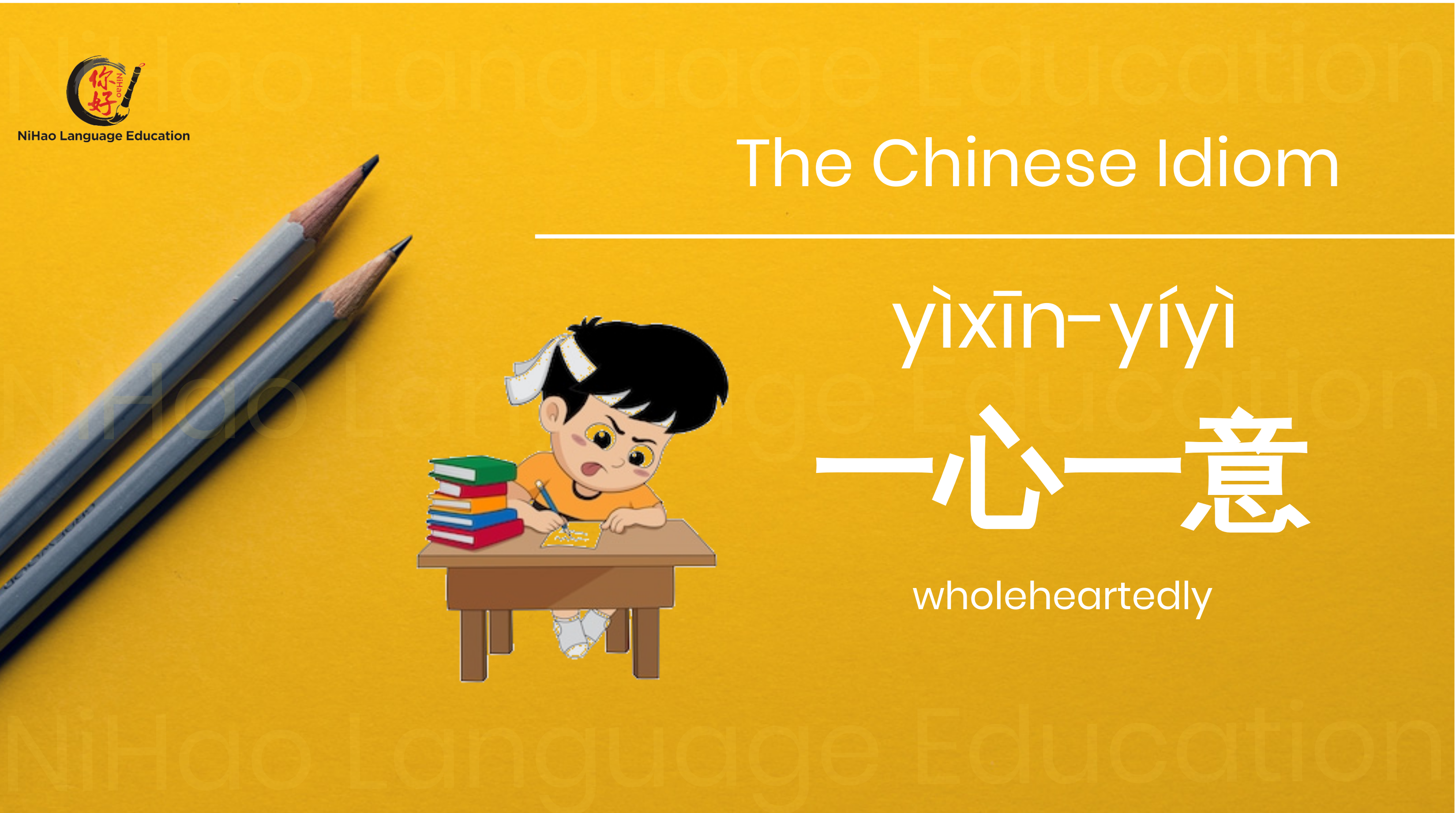
一(Yì)心(xīn)一(yí)意(yì) “一心一意”指心思专一,没有别的考虑。 ‘Yìxīn-yíyì’means ‘wholeheartedly , without reserving any other thought’. 一(yī): one 心(xīn): heart 一(yī): one 意(yì): will; intention; thought Examples例句: A: 我好久没见到小王了。 B: 他一心一意地想学好英语,所以每天都在家看书,很少出去。 2. 做什么事都要一心一意。
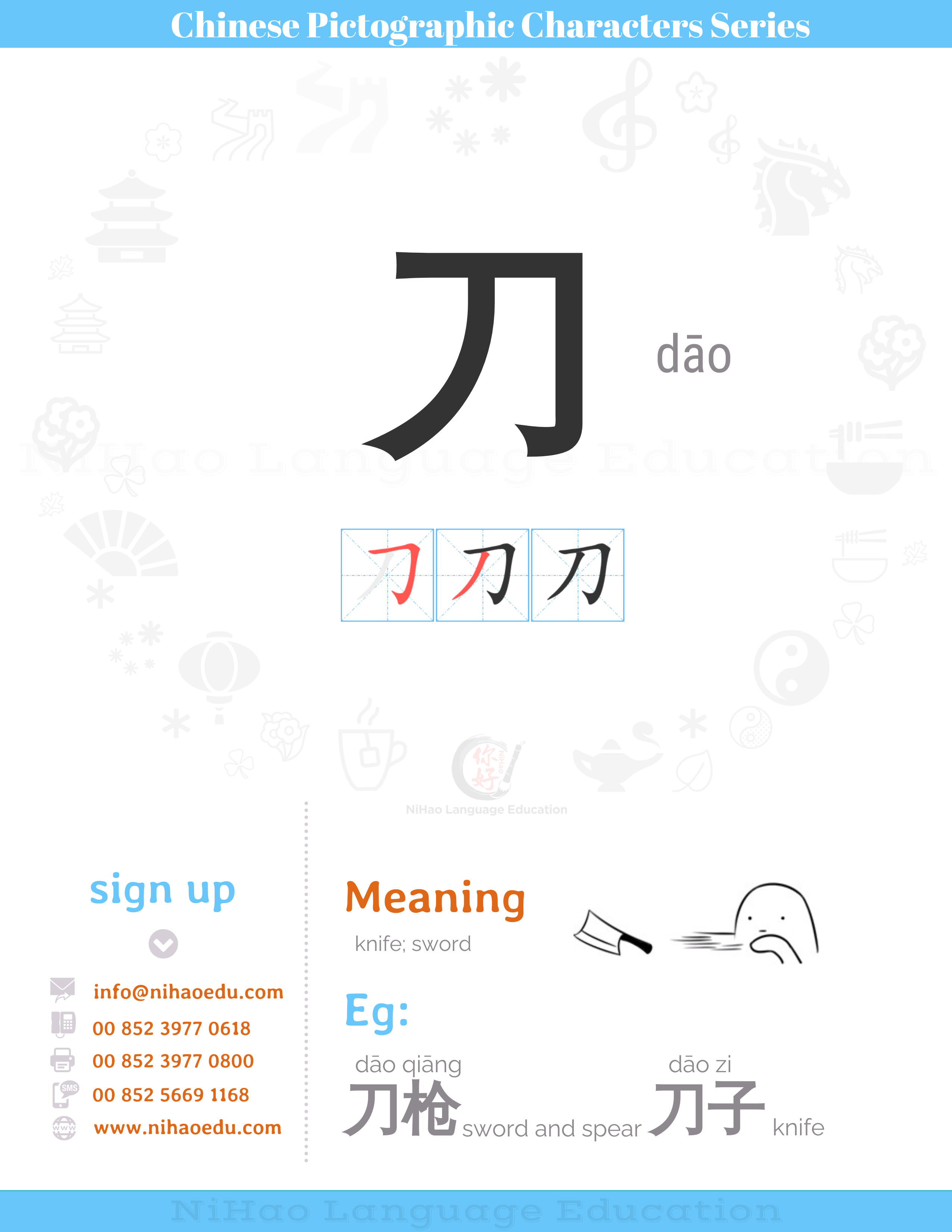
The word 刀 means ‘knife’ or ‘sword’. The pictogram of a word depicts a curved cutting tool with a short handle. The lower part of the pictogram represents the blade. In the past, before the introduction of gunpowder, swords were …
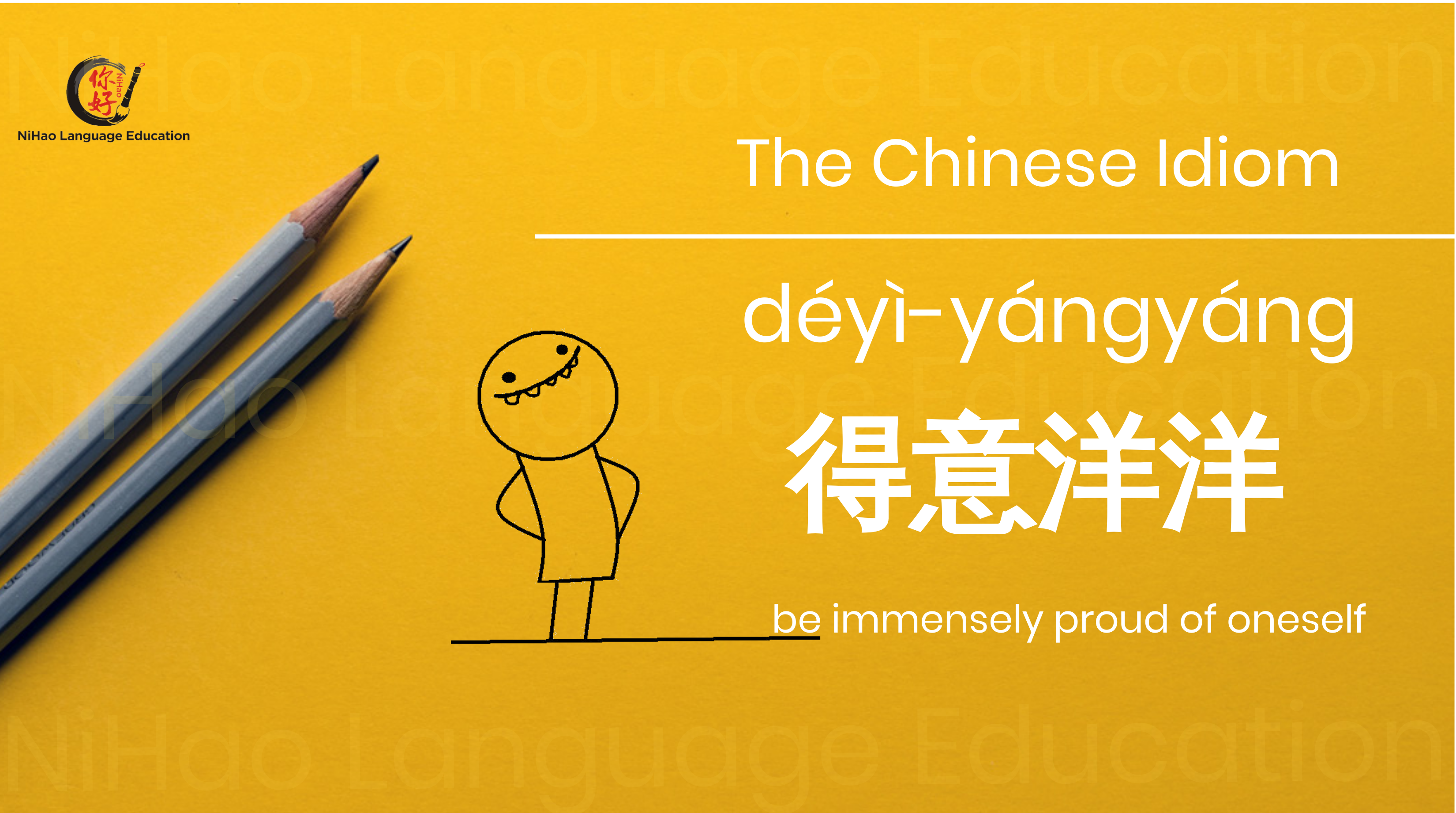
得(dé)意(yì)洋(yáng)洋(yáng) “得意洋洋”形容称心如意时神气十足的样子。 ‘Déyì-yángyáng’ is used to describe one is immensely proud of himself. 得(dé)意(yì): complacent; proud of oneself 洋(yáng)洋(yáng): self-satisfied Examples例句: A: 为什么他看上去得意洋洋的? B: 老师刚才表扬了他几句。 2. 他得意洋洋地给他的同事看他新买的车。